Why Does Water Pool in My Garden After Rain? Landscaping Solutions
Paving Adelaide a garden that stays soggy long after the rain has stopped is more than a minor inconvenience. Persistent water pooling can damage plants, wash away soil and nutrients, create muddy areas and gradually turn parts of the garden into places where very few plants thrive.
If you are wondering why water pools in your garden after rain, the cause is usually related to how water enters, moves through and leaves the site. Compacted soil, heavy clay, low spots, poor grading, blocked drainage and runoff from roofs or hard surfaces can all contribute.
The right landscaping solution depends on the cause. Improving the soil may solve a minor drainage issue, while a garden with significant runoff may need regrading, drainage channels, a rain garden or another method of managing excess water. Understanding the problem first can prevent you from spending money on a drainage solution that does not address the underlying issue.
Why Does Water Pool in a Garden After Rain?
Water naturally collects in the lowest areas of a property. If the soil can absorb the rainfall and the site has a suitable path for excess water to move away, temporary puddles may disappear relatively quickly.
Persistent pooling suggests that something is restricting infiltration or drainage.
Compacted Soil
Compacted soil contains fewer air spaces between soil particles. This reduces the movement of water and air through the soil and can leave rainfall sitting on the surface.
Compaction commonly develops where garden areas have been exposed to foot traffic, vehicles, construction equipment or repeated work while the soil is wet. Clay soils can be particularly susceptible. Gardening Australia notes that compacted soil can cause water to pool on the surface because water has difficulty moving through the compressed soil structure.
Heavy Clay Soil
Clay soils naturally have very small particles and can drain more slowly than coarse sandy soils. That does not mean clay is unsuitable for gardening, but poor structure or compaction can make drainage considerably worse.
Healthy soil structure and porosity help water infiltrate while retaining enough moisture for plants. NSW Government guidance identifies soil structure, porosity, organic matter and compaction as important factors affecting water movement and resistance to waterlogging.
Poor Garden Grading
Sometimes the soil itself is not the main problem. The garden may simply have been constructed with a low point where rainfall naturally collects.
This is common around newly landscaped areas, lawn edges, retaining walls, paths and garden beds. If the surrounding surface directs water towards one low section, that area can remain wet even when the rest of the garden drains normally.
Runoff From Hard Surfaces
Roofs, driveways, concrete paths and paved areas can generate concentrated runoff during heavy rain. Instead of soaking gradually into the ground, water can enter the garden in a large volume over a short period.
Gardening Australia recommends considering how water moves across the entire property, including the effect of permeable versus hard surfaces.
How to Find the Cause of the Pooling
Before installing a drain, spend some time watching the garden during rainfall.
Look at where the water comes from, where it travels and where it eventually stops.
Check for:
- Water flowing from a downpipe
- Runoff coming from a driveway or paved area
- A low section in the lawn
- Water moving towards the garden from an upper property area
- Compacted soil that stays hard when wet
- Soil erosion or visible channels
- Blocked pits, drains or grates
- Water collecting beside retaining walls
- Areas where plants consistently struggle
A simple observation can reveal whether you have an infiltration problem, a grading problem or a larger stormwater-management issue.
Landscaping Solutions for a Garden That Holds Water
Once you understand the cause, the solution can be designed around the site rather than simply adding more drainage products.
Improve Compacted Soil
If water is pooling because the soil has become compacted, improving its structure may be the first step.
Aeration can create pathways for air and water, while adding suitable organic matter can help improve soil structure over time. Gardening Australia recommends aerating compacted soil and incorporating organic matter as part of soil rehabilitation.
Avoid working heavily saturated clay soil. Walking, digging or driving machinery over wet clay can make compaction worse.
For established garden beds, improvement may need to happen gradually rather than through aggressive digging.
Regrade Low Areas
If the problem is caused by a low point, changing the grade may be more effective than trying to make the soil absorb an excessive amount of water.
Regrading involves reshaping the surface so water can move towards an appropriate collection or drainage point.
This needs to be planned carefully. Simply moving water from one part of the garden to another does not solve the problem, and directing runoff towards a neighbouring property or building can create a different issue.
For significant earthworks, retaining structures or changes around structures and property boundaries, professional advice may be appropriate.
Use Raised Garden Beds in Persistently Wet Areas
Some areas are naturally difficult to drain. Instead of fighting the existing conditions, you can sometimes raise the planting area.
Raised garden beds can lift plant roots above the wettest part of the soil profile and create a more controlled growing environment. Gardening Australia has also highlighted raised beds and slightly elevated growing areas as options for reducing waterlogging after periods of intense rain.
This can work particularly well for ornamental gardens and vegetable growing areas, provided the surrounding water is still managed appropriately.
Raising the garden without addressing substantial incoming runoff, however, may simply cause water to move around the bed instead.
Install a Suitable Drainage System
Some gardens genuinely require drainage infrastructure.
Depending on the site, possible solutions can include:
- Agricultural or subsoil drainage
- Surface drains
- Channel drains
- Collection pits
- Gravel drainage areas
- Swales
- Rain gardens
- Carefully designed stormwater connections
The correct system depends on the amount of water, soil conditions, fall across the site and available discharge point.
A drainage pipe buried in the garden is not automatically a solution. If there is nowhere for collected water to discharge safely, the system may simply move the problem underground.
Any connection to a property’s stormwater system should also comply with applicable local requirements and be completed by appropriately licensed trades where required.
Consider a Rain Garden
If your garden has a naturally wet area, a rain garden can turn the problem into a functional landscape feature.
A rain garden is designed to temporarily collect and manage rainfall before allowing water to infiltrate or move through an appropriately designed drainage system. Plants suited to periodically wet conditions can be incorporated into the design.
Gardening Australia describes rain gardens as a way of dealing with poorly drained or periodically wet areas while allowing water to collect and gradually infiltrate into the soil.
This approach can be particularly attractive when you would rather incorporate water management into the landscape than hide it entirely underground.
Plant selection needs to reflect the local climate and the actual wet-and-dry conditions of the site.
Use Permeable Landscaping Materials
If runoff is being generated by paths and other hard surfaces, changing the surface treatment can help.
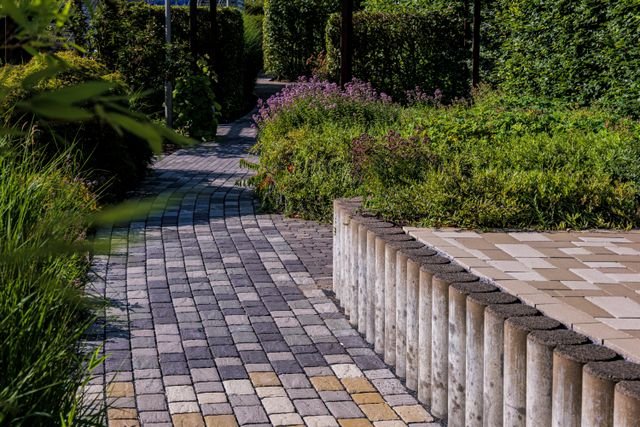
Permeable materials such as suitable gravel paths allow rainfall to pass through towards the soil instead of generating the same type of surface runoff associated with impermeable paving. Gardening Australia specifically recommends permeable surfaces as part of better water management in gardens.
This can be useful when redesigning:
- Garden paths
- Small courtyard areas
- Side access paths
- Garden edging
- Low-traffic outdoor areas
Permeability alone will not fix a garden with severe underlying drainage problems, but it can reduce unnecessary runoff as part of a broader landscape design.
Use Swales and Contour Landscaping on Sloping Blocks
Sloping gardens present a different challenge. Rather than water pooling because the garden is flat, runoff may travel quickly downhill before collecting in a low area.
A shallow contour swale can slow and spread water across a slope rather than allowing it to form one concentrated flow path.
Gardening Australia recommends swales, terraces, rocks and other barriers as ways of slowing runoff and reducing erosion on sloping sites.
Planting can also reinforce the design. Grasses and other plants with fibrous root systems can help hold soil together while their foliage reduces the impact of rainfall.
Choose Plants That Suit the Conditions
A common mistake is choosing plants based solely on appearance and then trying to make the site suit them.
If part of the garden regularly becomes wet, select plants that can tolerate those conditions rather than repeatedly replacing plants that prefer well-drained soil.
At the same time, avoid assuming that every plant in a wet garden needs to tolerate permanent saturation. A garden can have both wet and well-drained areas, and the planting design should reflect those differences.
Gardening Australia notes that plants with fibrous root systems can help protect soil and reduce erosion, while wet areas can be designed around plants suited to periodically waterlogged conditions.
When Does Water Pooling Need Professional Attention?
A small puddle that disappears reasonably quickly after ordinary rainfall may not require major drainage work.
Professional assessment becomes more worthwhile when:
- Water remains for extended periods after rain
- The same area becomes waterlogged repeatedly
- Soil is washing away
- Retaining walls are exposed to significant runoff
- Water is entering near buildings
- Drainage problems are affecting neighbouring properties
- Large volumes of stormwater enter the garden
- Plants repeatedly die from wet soil
- The garden has significant changes in level
Persistent waterlogging can deprive plant roots of oxygen and contribute to poor plant health.
Common Mistakes to Avoid
Installing a drain without identifying the water source
A drain cannot compensate for poor grading, major runoff or severely compacted soil if the underlying issue remains.
Adding sand to heavy clay without a proper soil strategy
Adding a random layer of sand is not a universal fix for clay drainage. Soil structure, organic matter, compaction and the existing profile all need to be considered.
Digging wet clay soil
Working saturated clay can increase compaction and make the problem harder to correct. Allow the soil to reach a workable condition first.
Blocking natural water paths
Building garden edging, retaining walls or other structures without considering existing runoff can redirect water into another area.
Choosing plants that cannot tolerate wet conditions
Repeated plant replacement is expensive and frustrating. Match plant selection to the drainage conditions of each part of the garden.
Assuming all pooling is a stormwater problem
Sometimes the simplest explanation is a compacted garden bed or low spot rather than a failed drainage system.
Frequently Asked Questions
How long should water stay in a garden after rain?
There is no universal time because drainage depends on soil type, rainfall intensity, grading and the site’s drainage system. If water repeatedly remains for long periods after ordinary rain, investigate the cause rather than simply adding more mulch or soil.
Does mulch help with garden drainage?
Mulch can protect soil from heavy rainfall and improve soil condition as organic materials break down, but it is not a substitute for drainage infrastructure where excess water has nowhere to go.
What is the best landscaping solution for a wet garden?
It depends on the cause. Options include improving compacted soil, regrading, raised beds, permeable surfaces, swales, rain gardens or drainage systems. The right solution should be selected after identifying how water enters and leaves the area.
Can plants help with waterlogged soil?
Yes, plants suited to wet conditions can be incorporated into a rain garden or wet landscape area. Their roots can also contribute to soil structure and stability, but plants should not be expected to absorb unlimited runoff.
Why does water pool in my garden but not my neighbour’s?
Small differences in grading, soil structure, compaction, drainage, paving and landscaping can significantly change how water moves across two neighbouring properties.
Should I install a French drain?
A French drain can be useful in some situations, but it is not automatically the correct solution. The drainage route, soil conditions, water volume and discharge point should be assessed before installation.
Final Thoughts
If you keep asking why water pools in my garden after rain, start by watching the water rather than immediately installing a drain.
Identify where it comes from, where it travels and why it stops. The answer may be compacted soil, a low point, heavy clay, excessive hard-surface runoff or inadequate drainage.
For minor problems, improving soil structure, changing the planting design or introducing permeable surfaces may be enough. More persistent problems may require grading, swales, raised beds, rain gardens or professionally designed drainage.
If pooling is frequent, severe or affecting plants, structures or neighbouring areas, a site assessment can help identify the cause before you commit to landscaping work. A properly planned solution can make the garden more functional while keeping water management integrated with the overall landscape design.